Pet-friendly flooring: scratches, accidents and traction
Claws, water bowls and accidents test every floor. Compare materials on scratch resistance, moisture tolerance, cleaning and comfort for pets.
By Stride Floor Editorial Published Updated 2 min read
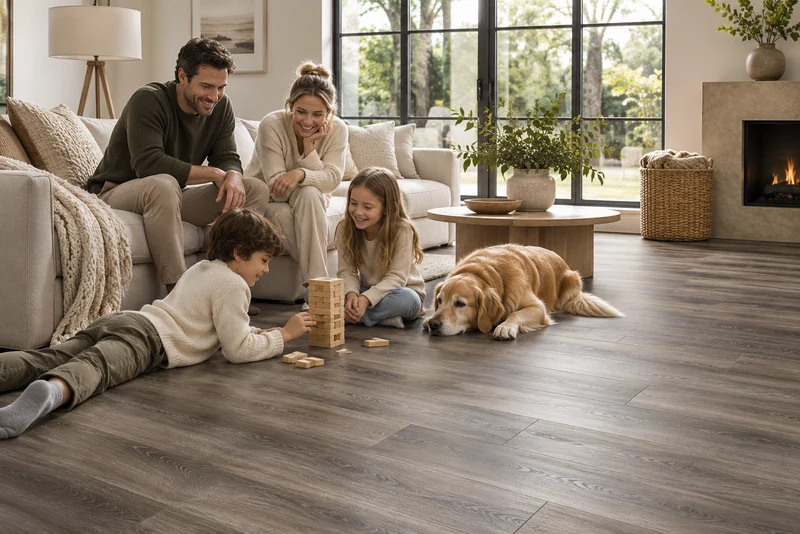
Pets are hard on floors in three ways: claws scratch, accidents and water bowls bring moisture, and smooth surfaces can be slippery for older dogs.
What to look for
- Scratch resistance: a hard wear layer or a hard surface such as porcelain.
- Moisture resistance: sealed seams or waterproof cores so accidents don't soak in.
- Easy cleaning: few grout lines or sealed grout.
- Traction: textured surfaces help pets get up and move safely.
- Noise: hard floating floors can be loud with clicking claws; good underlayment helps.
Materials compared
- Luxury vinyl plank: a strong all-rounder; choose a thicker wear layer and textured finish.
- Porcelain tile: extremely scratch resistant; grout should be sealed; can be slippery when wet.
- Laminate: hard surface resists scratches, but standing liquid can damage edges on standard products.
- Hardwood: harder species and matte finishes hide scratches better; plan to refinish over time.
- Carpet: soft for pets but holds hair, odor and stains; if you choose it, look for stain-resistant fibers.
Practical tips
- Keep claws trimmed and put mats under water bowls.
- Clean accidents quickly, even on "waterproof" floors — liquid can get to subfloor at edges.
- Keep spare planks for future repairs.
Try the room finder with "Pets" selected.
Sources
- Manufacturer wear-layer and warranty documentation (product-specific)
See our editorial policy. Cost figures are planning ranges, not quotes.
Get prices for your own floor