

Luxury vinyl plank (LVP) flooring cost
What you pay for with LVP — wear layer, core type, underlayment and floor prep — plus why flatness, not the plank, often drives the final price.
By Stride Floor Editorial Published Updated 2 min read
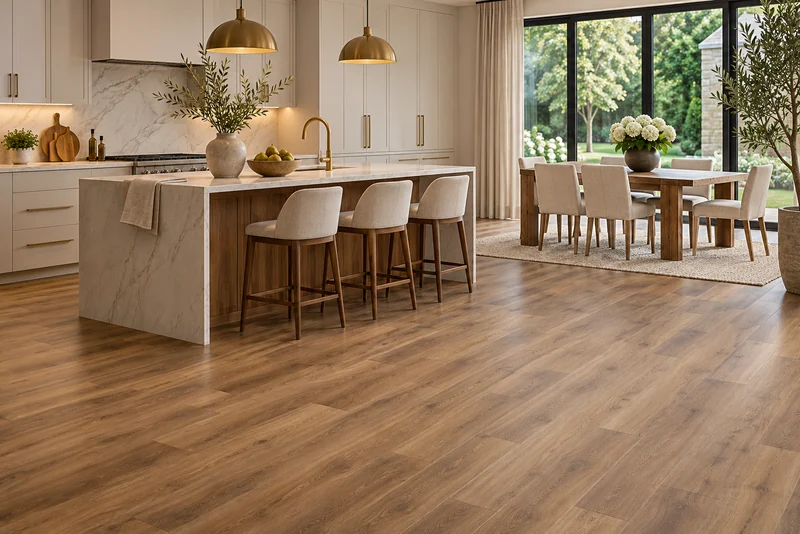
Luxury vinyl plank is popular because it's water resistant, comfortable and quick to install. The cost spread comes from the product's construction and from how much work the floor underneath needs.
About these prices: national ranges per square foot, compiled from published 2025–2026 cost guides (listed under Sources). Where sources disagreed we used the range they share. Your local price depends on the product, the room and the floor underneath — use quotes for a firm number.
Typical price components
| Item | Basis | Range |
|---|---|---|
| LVP material | per sq ft + waste | $2–$7 |
| Installation (floating click) | per sq ft | $1.50–$5 |
| Glue-down installation | per sq ft | usually more than floating — ask for a separate line |
| Underlayment (if not attached) | per sq ft | about $0.50 |
| Leveling / patching | per sq ft | $1.50–$4 |
| Removal of old flooring | per sq ft | $1–$3 |
What changes the material price
- Wear layer thickness (measured in mils). Thicker wear layers resist scratches and suit busy homes and pets.
- Core type. Rigid cores (stone-plastic or wood-plastic composite) hide minor subfloor flaws better than flexible vinyl; flexible products usually need a flatter substrate or glue-down installation.
- Overall thickness and attached pad. An attached pad adds comfort and sound reduction and can remove the need for separate underlayment.
- Visual quality. Embossed-in-register texture, longer planks and more pattern variation cost more.
Why prep matters so much
LVP follows the shape of whatever is underneath. Dips and humps cause joints to flex and click-locks to fail. Manufacturers publish a flatness tolerance; meeting it may mean grinding high spots or applying patch or self-leveling compound. In older homes and on concrete slabs, prep can be a significant share of the total.
Concrete slabs also need a moisture check. Many LVP products tolerate moisture but still require a vapor barrier under certain conditions.
Labor factors
- Floating installs are generally faster than glue-down.
- Kitchens with cabinets, islands and appliances take longer than open rooms.
- Stairs are priced per step and often need separate stair nosing.
- Removing and reinstalling baseboards, toilets and appliances may be extra.
Estimating your project
Waste allowance applies to material only. For 500 sq ft at 10% waste you'd buy about 550 sq ft of planks but pay labor on 500 sq ft. The cost calculator shows the split.
Questions to ask installers
- Which product line and wear layer are you quoting?
- Is underlayment included or attached?
- How will you check flatness, and what does leveling cost?
- Are transitions, stair nosing and baseboard work included?
- What does the warranty cover — product, workmanship or both?
Get LVP quotes from local installers.
Sources
- Fixr flooring cost guides (fixr.com/costs), updated January 2025
- This Old House flooring cost guides (thisoldhouse.com/flooring), March–June 2026
- Bob Vila flooring cost guides (bobvila.com), 2022–2024
- Manufacturer installation guide for flatness tolerances
See our editorial policy. Cost figures are planning ranges, not quotes.
Get prices for your own floor