

Hardwood vs. luxury vinyl plank: which is right for you?
Real wood or a water-resistant lookalike? A practical comparison of durability, water, comfort, resale perception, repairs and installation.
By Stride Floor Editorial Published Updated 2 min read
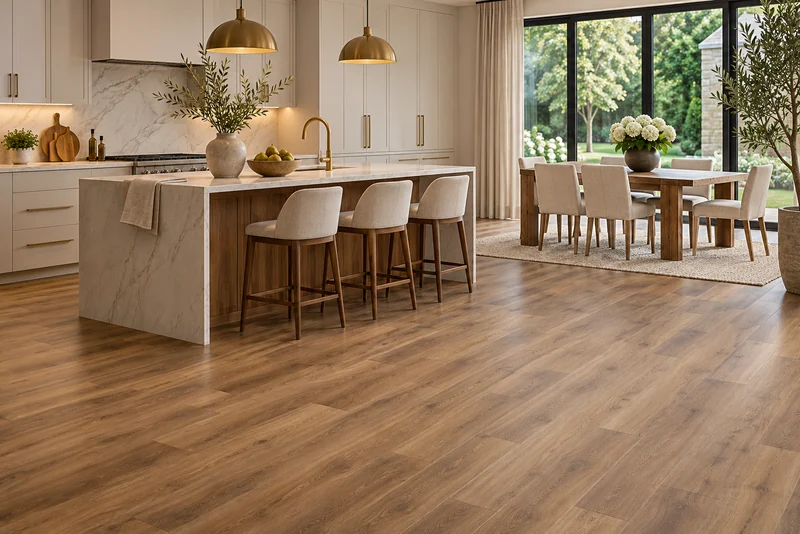
Hardwood and luxury vinyl plank (LVP) can look surprisingly similar once installed. The differences show up over years of use, in wet rooms and when something gets damaged.
Quick comparison
| Hardwood | LVP | |
|---|---|---|
| Material | Real wood (solid or engineered) | Vinyl layers with a printed wood image |
| Water | Can cup, swell or stain if water sits | Water resistant; many are waterproof |
| Scratches | Softer species show dents and scratches | Wear layer resists everyday scratches |
| Repair | Can be sanded and refinished | Damaged planks are replaced |
| Comfort | Warm, solid feel | Varies; attached pads improve comfort |
| Best rooms | Living, dining, bedrooms | Kitchens, baths, basements, rentals |
Water and humidity
This is the biggest practical difference. Wood responds to moisture by expanding and contracting. Spills wiped up quickly are fine; slow leaks, wet mopping and below-grade dampness are not. LVP tolerates spills and humidity far better, which is why it's common in kitchens, bathrooms and basements.
Wear and repair
Hardwood can be refinished several times, so deep scratches are fixable and you can change the color later. LVP can't be refinished; a damaged plank is replaced, which is easier if you kept spare planks from the same lot.
Feel and sound
Nailed hardwood feels solid. Floating LVP can sound hollow without a good underlayment. Thicker products with attached pads help.
Installation
LVP usually installs faster as a floating floor, but it's sensitive to subfloor flatness. Hardwood installation and especially site finishing take longer and need acclimation and moisture checks.
Cost
Compare like for like with the cost calculator, which separates material, labor and extras.
Bottom line
Choose hardwood for long life, refinishability and the feel of real wood in dry rooms. Choose LVP where water, pets or budget are the priority. Many homes use both: wood in living areas and LVP in kitchens and basements. Try the room finder to see suggestions for each room.
Sources
- Manufacturer care and installation guides (check the specific product)
- National Wood Flooring Association homeowner resources
See our editorial policy. Cost figures are planning ranges, not quotes.
Get prices for your own floor