Basement flooring: what works below grade
Basements are damp, cool and usually concrete. Here's how to choose flooring that won't fail — and the moisture checks to do first.
By Stride Floor Editorial Published Updated 2 min read
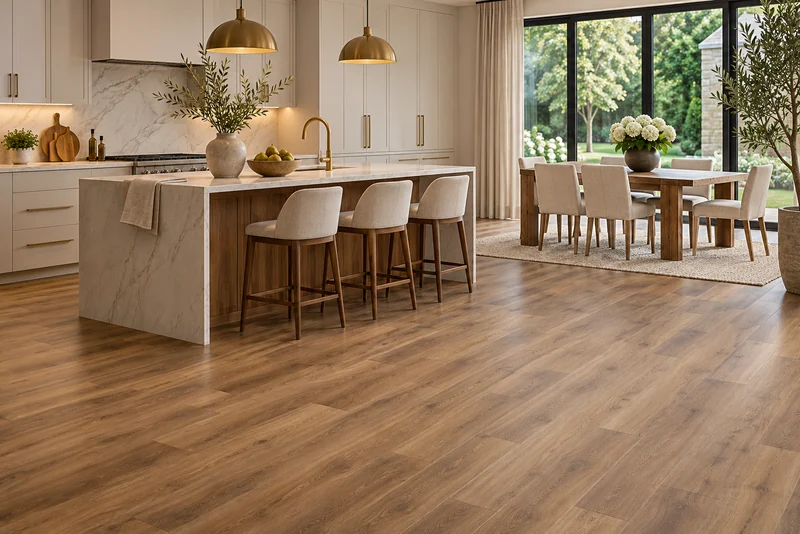
Below-grade floors sit on concrete that's in contact with the ground. Even a basement that looks dry can push moisture vapor up through the slab. The right floor tolerates that moisture; the wrong one traps it.
Start with moisture
Before choosing flooring:
- Fix water problems first: gutters, grading, cracks and leaks.
- Ask your installer to test slab moisture with the method the flooring manufacturer requires.
- Plan for a vapor barrier or moisture-tolerant underlayment if required.
Good choices
- Luxury vinyl plank or tile: tolerant of moisture and installs over concrete with the right underlayment.
- Porcelain or ceramic tile: unaffected by water; can feel cold, so consider rugs or radiant heat.
- Epoxy or polyaspartic coatings: bond directly to properly prepared concrete; good for utility and workshop areas.
- Engineered hardwood: only products rated for below-grade use, installed exactly as specified.
Use caution
- Solid hardwood is generally not recommended below grade.
- Laminate can work with a vapor barrier, but standard cores swell if water gets in.
- Carpet adds warmth but can hold moisture and odor; if used, choose synthetic carpet and a moisture-resistant pad, and keep humidity in check.
Comfort
Basements feel cold. Insulated subfloor panels or thicker underlayments raise warmth underfoot but also raise floor height — check stairs and doors.
Use the room finder to see materials ranked for a damp basement, then compare installers.
Sources
- Manufacturer below-grade installation requirements (product-specific)
- US EPA guidance on moisture and mold in homes
See our editorial policy. Cost figures are planning ranges, not quotes.
Get prices for your own floor