

Subfloor basics: why the layer you can't see matters
What a subfloor is, how flatness and stiffness affect every kind of flooring, and the warning signs that mean repairs come first.
By Stride Floor Editorial Published Updated 2 min read
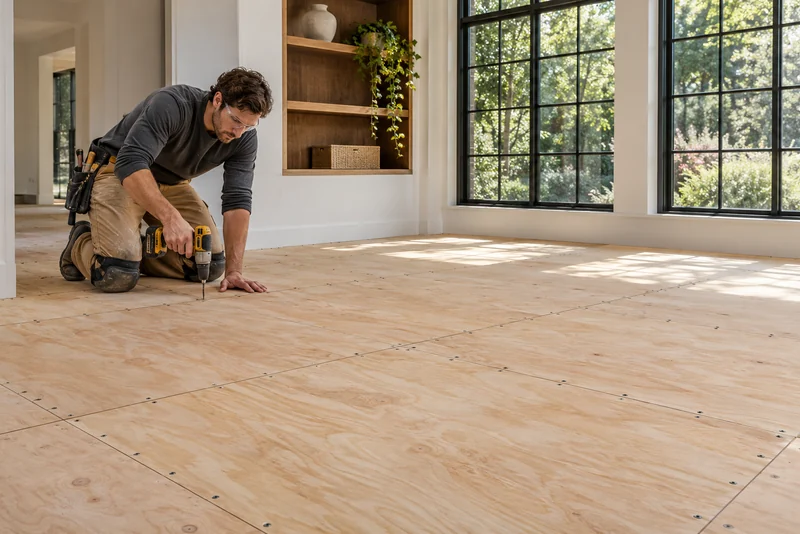
Your finished floor is only as good as what's under it. The subfloor is the structural surface — usually plywood or OSB on joists, or a concrete slab.
Why it matters
- Flatness: floating floors and large tiles telegraph dips and humps; joints fail and tiles crack.
- Stiffness: a floor that flexes cracks tile and grout and causes squeaks.
- Moisture: wet subfloors swell, rot or transmit moisture into wood and adhesives.
- Fastening: loose panels squeak and move.
Warning signs
- Soft or spongy spots, especially near bathrooms and kitchens
- Squeaks that move as you walk
- Visible dips, humps or slopes
- Stains, odor or mold around fixtures
- Cracked grout or tiles in an existing floor
Common fixes
- Re-screw loose panels into joists
- Replace damaged sections
- Add an underlayment layer for stiffness under tile
- Grind high spots and fill low spots with patch or self-leveler
- Fix the water source before repairing water damage
On concrete
Slabs need moisture testing and may need grinding or leveling. Cracks may need repair or isolation membranes under tile.
A good installer checks the subfloor before quoting. If you suspect problems, ask for subfloor repair quotes.
Sources
- Manufacturer flatness and deflection requirements (product-specific)
- APA – The Engineered Wood Association panel resources
See our editorial policy. Cost figures are planning ranges, not quotes.
Get prices for your own floor