

Laminate vs. vinyl plank: the real differences
Both are affordable wood looks that float over the subfloor. They differ in water tolerance, feel, sound and repair. Here's how to choose.
By Stride Floor Editorial Published Updated 2 min read
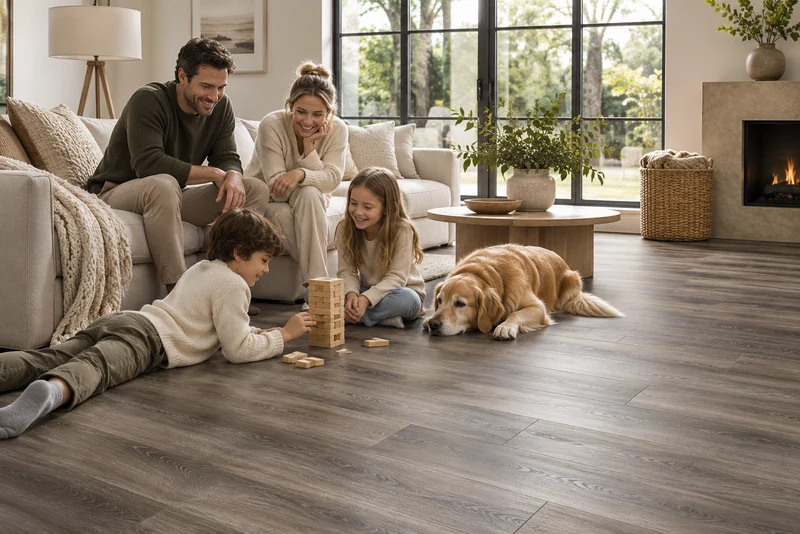
Laminate and luxury vinyl plank (LVP) are often shelved side by side. They look alike but are made differently.
Construction
- Laminate: a high-density fiberboard core with a photographic layer and a hard, clear wear layer.
- LVP: vinyl or rigid composite core with a printed layer and a vinyl wear layer.
Side by side
| Laminate | Vinyl plank | |
|---|---|---|
| Water | Core can swell if water sits on seams (water-resistant lines are better) | Water resistant to waterproof |
| Scratch resistance | Very hard surface | Good; depends on wear layer |
| Feel | Firm, more like wood | Softer, quieter with a good pad |
| Realism | Crisp, deep embossing | Very good on premium lines |
| Repair | Replace planks | Replace planks |
Where each fits
- Laminate: living rooms, bedrooms, offices — dry areas with heavy foot traffic.
- LVP: kitchens, bathrooms, basements, laundry rooms and homes with pets.
Shared requirements
Both need a flat subfloor, expansion gaps at walls and the right underlayment. Over concrete, both usually need a vapor barrier.
Compare both in the material comparison tool.
Sources
- Manufacturer product specifications (check AC rating and wear layer)
See our editorial policy. Cost figures are planning ranges, not quotes.
Get prices for your own floor