

Solid vs. engineered hardwood
Both are real wood on top. They differ in stability, where they can be installed, how many times they can be refinished and how they're installed.
By Stride Floor Editorial Published Updated 2 min read
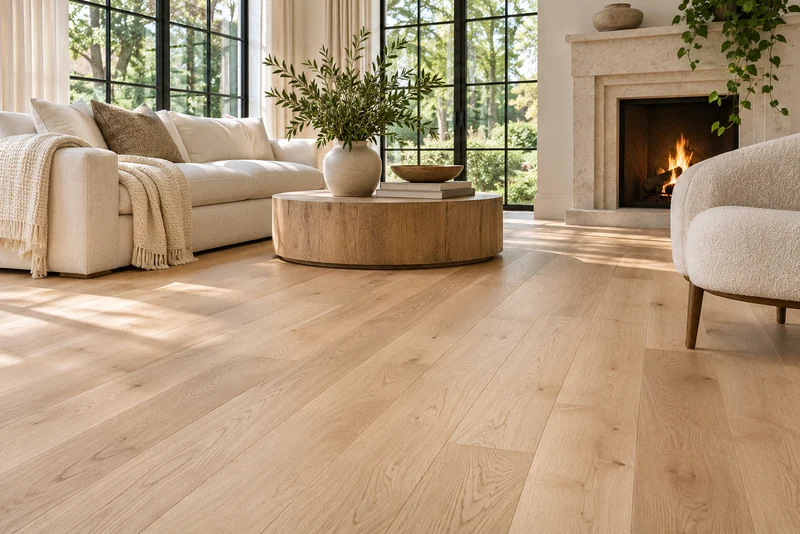
Both solid and engineered hardwood give you a real wood surface. The difference is underneath.
Construction
- Solid hardwood: each board is one piece of wood, typically about 3/4 in. thick.
- Engineered hardwood: a real wood wear layer bonded to a plywood or composite core.
Comparison
| Solid | Engineered | |
|---|---|---|
| Stability with humidity | Moves more | Moves less |
| Below grade (basements) | Generally no | Some products yes |
| Over concrete | Usually needs a wood subfloor | Can glue down or float |
| Refinishing | Many times | Depends on wear layer thickness |
| Wide planks | More prone to cupping | Better suited |
| Installation | Nail-down | Nail, staple, glue or float |
Which to choose
- Choose solid for a traditional floor over a wood subfloor in above-grade rooms, where you want the option to refinish many times.
- Choose engineered for concrete slabs, basements (if rated), radiant heat (if approved) or wide planks.
Quality matters within each type
A cheap engineered floor with a thin wear layer and weak core is not equivalent to a premium one. Ask for wear layer thickness and core construction.
See the engineered hardwood cost guide and compare materials.
Sources
- National Wood Flooring Association resources
- Manufacturer installation instructions (product-specific)
See our editorial policy. Cost figures are planning ranges, not quotes.
Get prices for your own floor