

Repair or replace your floor?
A decision guide for damaged floors: when a board replacement, refinish or patch is enough, and when it's time to replace the whole floor.
By Stride Floor Editorial Published Updated 2 min read
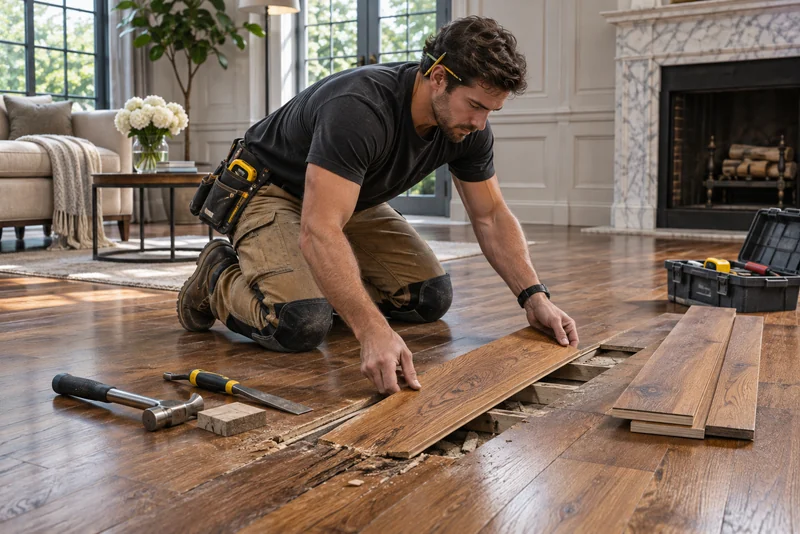
Not every damaged floor needs replacing. The right answer depends on how much is damaged, why, and whether matching materials are available.
Usually repair
- A few scratched, stained or cracked boards or tiles
- Squeaks from loose fasteners
- Worn finish on otherwise sound hardwood (refinish)
- Small water damage after the leak is fixed and the subfloor is dry and sound
Usually replace
- Widespread water damage, mold or soft subfloor
- Floating floors with failing joints across large areas
- Floors past their wear layer (engineered wood sanded thin, worn-through laminate or vinyl)
- When you want a different material or layout
The matching problem
Repairs look best with spare boards from the original installation. Discontinued products, faded wood and color lot differences can make patches visible. A pro can sometimes weave in boards from closets.
Ask the contractor
- What caused the damage, and is the cause fixed?
- Can you match the existing floor?
- What's the cost of repair vs. replacement, and the expected life of each?
Sources
- National Wood Flooring Association resources
- Manufacturer warranty terms (product-specific)
See our editorial policy. Cost figures are planning ranges, not quotes.
Get prices for your own floor